Article
20 July 2026
PLOUGHMAN NOTES PROVE THE RICHNESS OF IRISH SOIL WITH A COMBINED TALLY OF £34,500
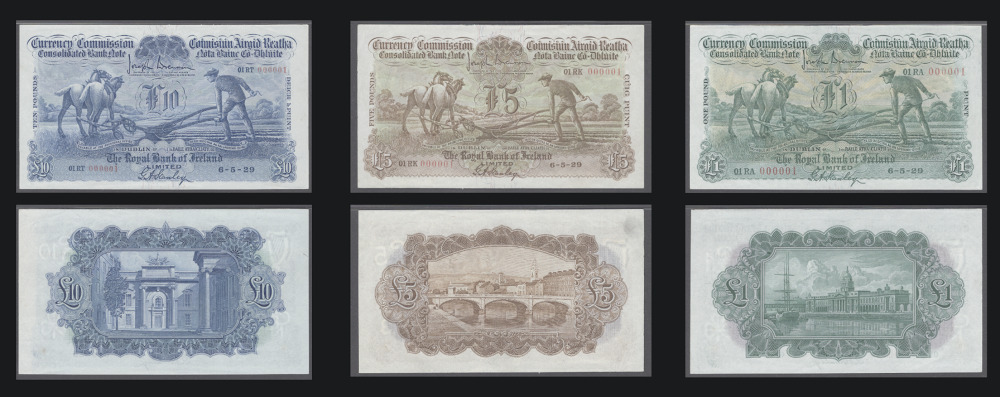
The enduring appeal of Ireland’s Ploughman Notes was underscored again in this auction as the trio of £10, £5, and £1 notes of the 6 May1929 issue combined to take a hammer total of £34,500 – the first two notes leading the sale.
These Consolidated Bank Notes replaced a variety of designs with the Ploughman used across all six denominations, from £1 to £100 – the distinguishing factor being their colour. The three here each carried the serial number 000001 and the Brennan and Stanley signatures.
The only other example of a Royal Bank £10 on the PMG population report is a 25 – this one is a 55 – “a fantastic banknote in scarcely believable condition,” said Noonans’ Head of Banknotes, Andrew Pattison. Estimated at £8,000-10,000, it sold for £15,000.
The £5, in PMG holder 53, is one of only 15 or so examples extant. “One of the finest Irish banknotes you are ever likely to see,” said Andrew Pattison. Pitched at £6,000-7,000, it made £13,000.
The £1, in PMG holder 55 – the nearest equivalent note on the PMG population report being a 20 – had a guide of £4,000-5,000 and went for £6,500.
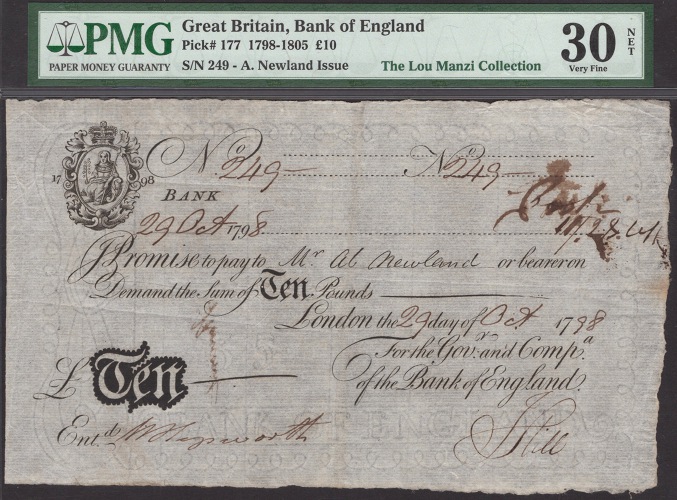
Other highlights from the sale included a Bank of England, Abraham Newland, £10, dated 29 October 1798, with serial number 249, that sold within estimate at £13,000; and another Bank of England £10, of Frank May, dated London, 24 January 1888, with serial number 36/X 6510, that also went within estimate at £10,000.
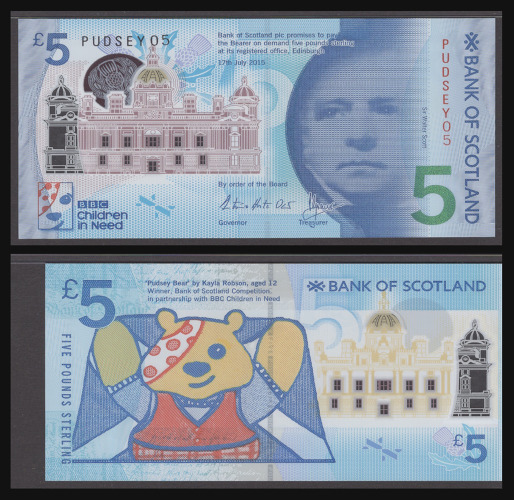
Thought to be the rarest modern polymer banknote in the world, a Bank of Scotland, commemorative £5, dated 17 July 2015, sold for £9,500 against hopes of £5,000-7,000. With serial number PUDSEY05, it had been created for the ever-popular BBC Children In Need and inspired by its mascot Pudsey Bear and was one of only 50 such notes produced.
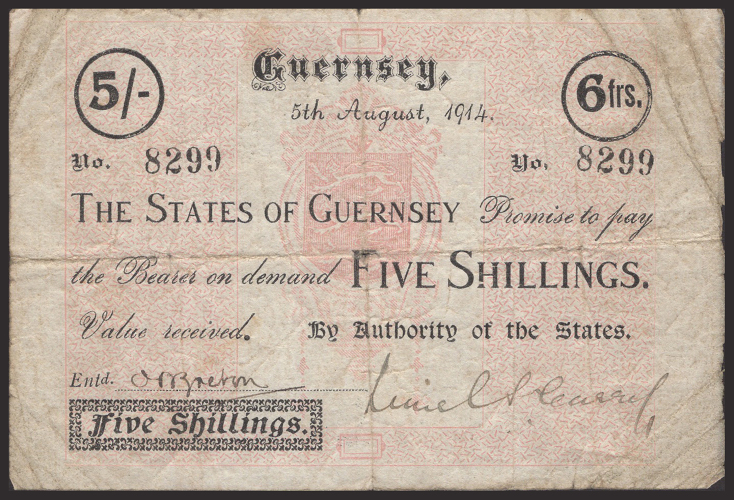
A First World War Issue, States of Guernsey 5 Shillings (6 Francs), dated 5 August 1914 came with an estimate of £4,000-5,000, but rose to £8,500.
Share This Page