Article
20 July 2026
INNOVATION AND RARITY – HOW THE ENGLISH CIVIL WAR CREATED THE PERFECT SETTING FOR FUTURE COIN COLLECTORS
Turbulent times call for extraordinary measures, and in the case of Charles I (1625-1649) and the English Civil War, this inadvertently created a boon for coin collectors.
Mints arose as Royalist control shifted from one place to another, necessity led to the creation of siege pieces, while milled or machine-struck coins also entered the fray to meet increasing demand against a background of a limited supply of bullion.
Taking all this into account, it is no surprise that it is coinage from Charles I that is expected to lead the way in the sale of this collection.
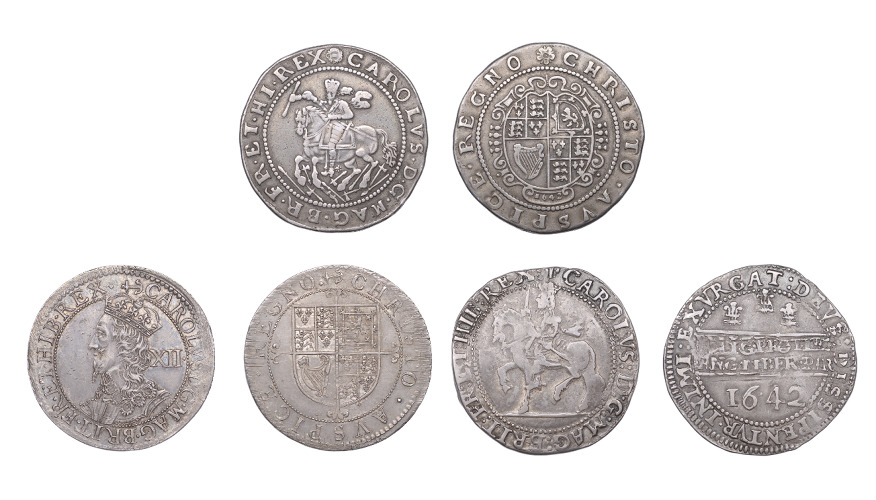
A Truro mint half crown, ‘1642’, with Truro rose on the obverse and Exeter rose on the reverse, depicts the King holding a marshal’s baton aloft, galloping over arms. The reverse shows a scroll-garnished oval shield with lion’s paws at the sides and date in the cartouche below.
Skillfully pierced and plugged in the centre, it has minor condition issues but is otherwise in good fine condition and very rare. The estimate is £1,500-2,000.
The French engraver and medallist Nicholas Briot is closely associated with milled coinage. Three shillings from his Second Milled issue in the late 1630s appear here, distinguished from each other by their condition and guides (£1,000-1,500), (£700-900) and (£600-800).
An Oxford mint Half crown, dated 1642, has the Shrewsbury plume without coronet on the obverse only, and the Shrewsbury horseman with no plume behind, the groundline below. To the reverse is the Declaration in two lines, and three Oxford plumes above, with date below. In fine condition, the reverse better but double-struck, it carries hopes of £600-800.
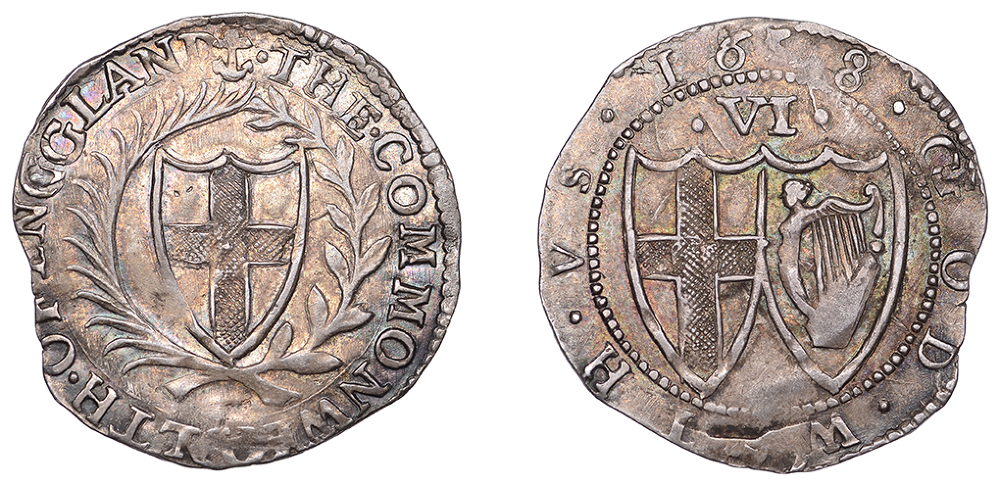
The Interregnum brought its own numismatic interest. Gone is the King’s head – literally and symbolically on the coinage – and Parliament underscores its sovereignty and political power with its own symbols of the shield and cross of St George amid the laurel wreath of victory to the obverse and the same shield next to the harp of Ireland to the reverse below ‘VI’ to denote the denomination of sixpence. Gone, too, are the Latin inscriptions, to be replaced by English and the simple legend: The Commonwealth of Enggland to the obverse, and 1658 God with us to the reverse.
No stop appears to the left of the anchor mint mark. With some weakness in the legend at 6 o’clock on both sides, this is an otherwise good very fine coin and extremely rare. It has a guide of £1,500-2,000.
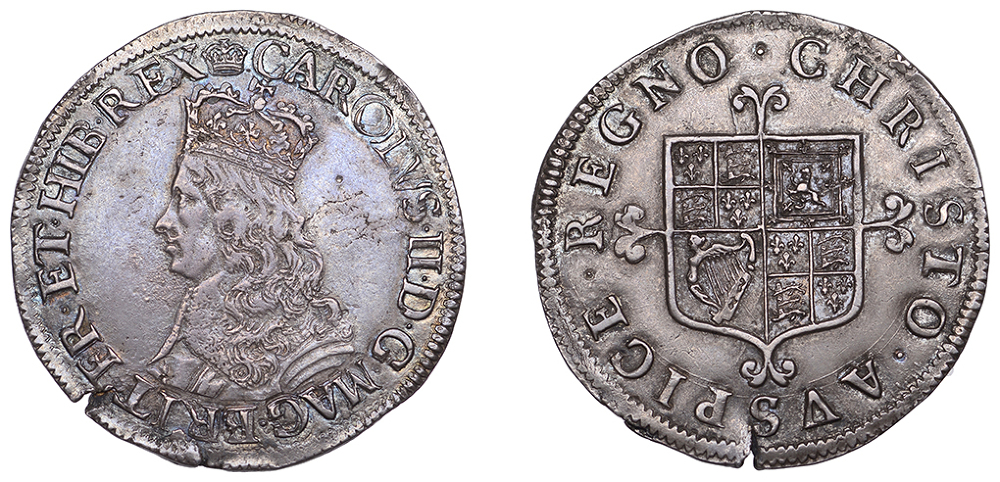
A very fine example of a Charles II (1660-1685) Shilling from his first Hammered issue is marred by a small striking split at 7 o’clock but is in otherwise very fine condition, the reverse better, and attractively toned. It is expected to sell for £1,500-2,000.
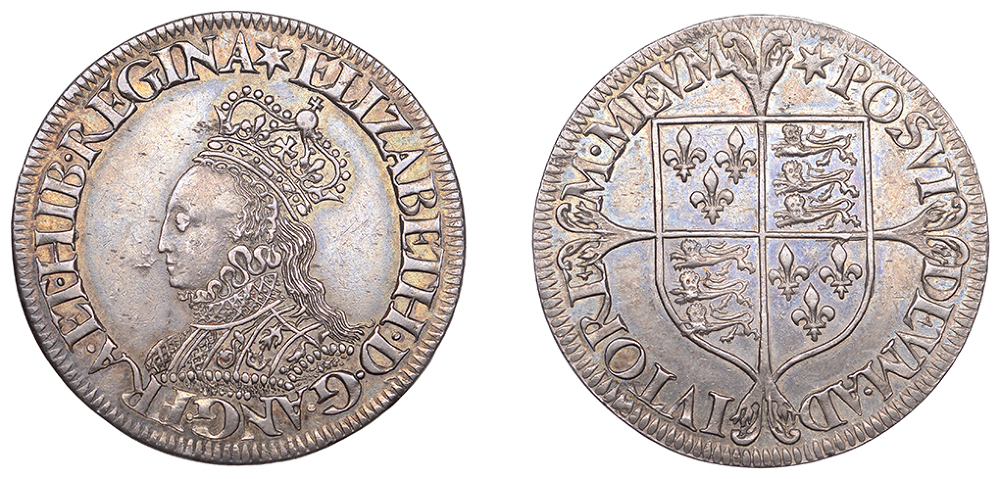
Earlier reigns contributing highlights include that of Elizabeth I (1558-1603). A milled Shilling, of small size, with bust A to the obverse, in a wonderfully decorated dress, includes the star between Regina and Elizabeth. It has some light surface marks but is otherwise in good very fine condition and toned. The estimate is £1,000-1,500.
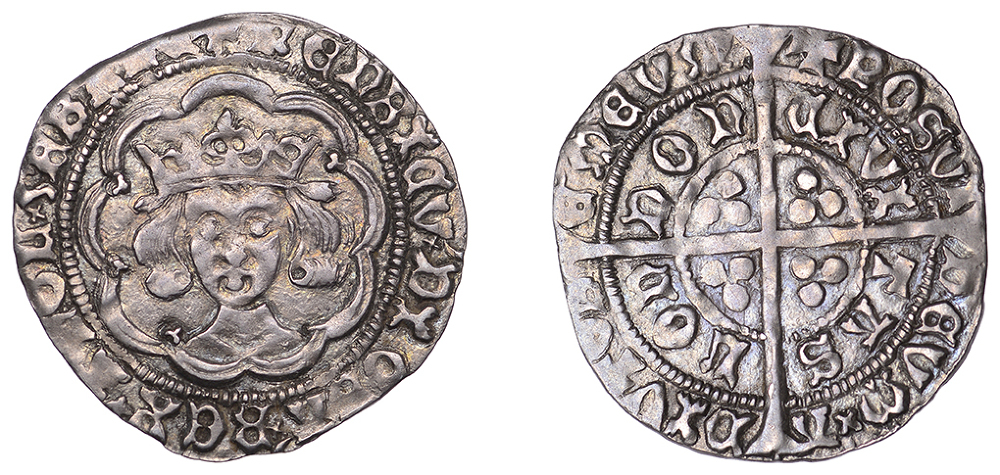
Two Groats from the restoration of Henry VI (1470-1471), both minted in London, have slight variations to the reverse and differing conditions. One is very fine, with grey tone, and rare at £500-700; the other is a trifle weak in the third quarter of the reverse, but otherwise very fine and toned at £400-500.
Share This Page