Article
15 June 2026
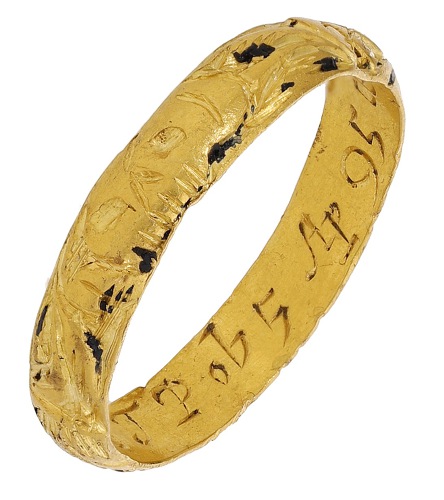
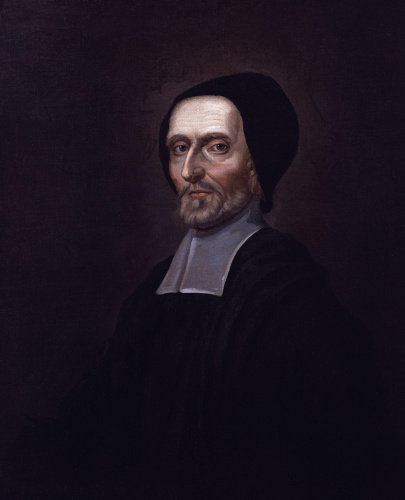
A gold memorial ring with a memento mori skull motif inscribed to Dr Richard Busby (1606-1695) which was discovered by metal detectorist Amanda Parker in Catforth, near Preston (Lancashire) is estimated to fetch in the region of £3,000 in an auction of Jewellery at Noonans on Tuesday, June 23, 2026. Busby was the headmaster of Westminster School from 1638 until his death; and described as “the most celebrated schoolmaster of his time.” He is buried in Westminster Abbey and among his many notable pupils were philosopher John Locke, architect Christopher Wren, playwright Robert Dryden, diplomat Matthew Prior, composer Henry Purcell and physicist Robert Hooke [lot 110].
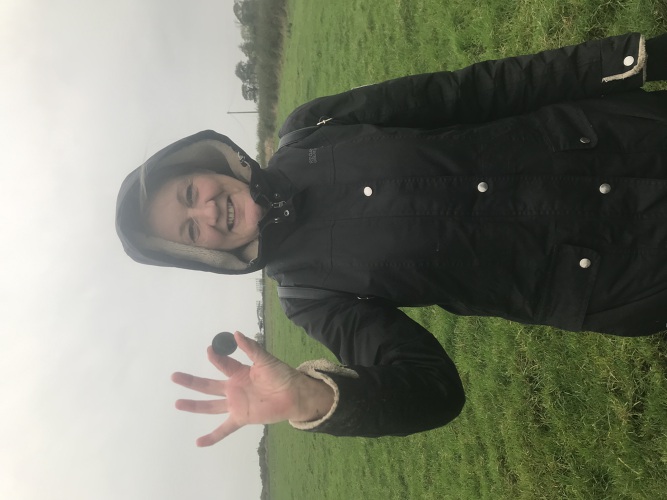
Amanda, who is a single lady in her 50s with two grown up daughters. Her daughter and her partner are metal detectorists, and they invited her to have a go! She really enjoyed it and bought her own detector an XP DEUS II in 2022. She then joined a few Facebook detecting groups and attended some day and weekend rallies.
She recalls: “I plucked up the courage to ask a few local farmers if I could detect on their land and luckily some said yes. The farm I found the ring on is a very small farm comprising just three fields - situated down a single-track road and directly opposite the old Methodist Chapel. I had passed it very often as my parents lived at the bottom of this road for several years. I gained permission in 2024 and had only been detecting there a handful of times leading up to finding the ring.”
She continued: “The day I found the ring it was a lovely sunny August day; the farm is a five-minute drive from my house so I thought I would go out detecting for a couple of hours. I entered the field, switched on my detector and walked what must have been only 20 steps slightly right to the footpath and got a lovely sounding signal with a VDI of 75. When I turned the clod, there sitting in the bottom of an 8-inch hole was the glint of gold, I initially thought it was a wedding band. However, when I gently removed the ring from the hole, I could see an inscription on the inside in italic script ‘Ri Busby’ and thought it was a posy ring. I must have sat in the field next to the hole for a good 10-15 minutes not believing what I had just found and being alone not able to share my excitement with anybody. I deeply regret not taking any photos at that moment but I was not sure what I had found at the time, having filled the hole in I detected all around it to make sure there wasn't anything else near it but simply could not concentrate, I wanted to get home and look more closely at the ring.”
Once home Amanda typed the name Richard Busby into the computer and couldn’t believe what she was reading. Her daughter and her partner put a photo of the ring onto a detecting forum that evening and they confirmed what she had read earlier in the day and the ring was a memorial ring for a Dr Richard Busby of Westminster School, London.
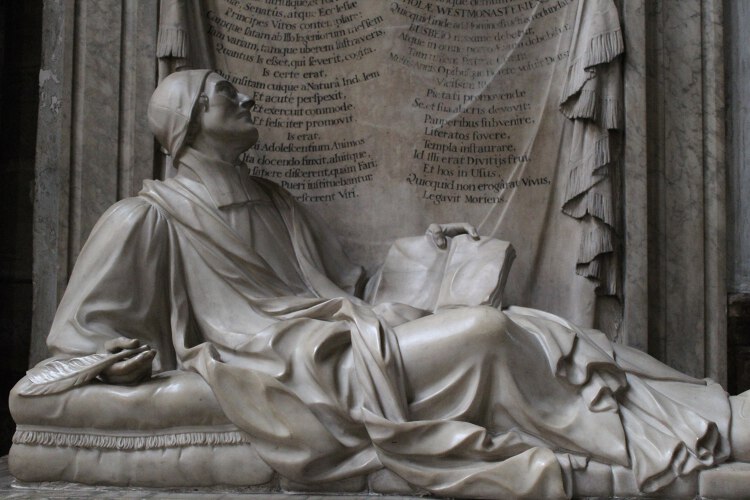
Since finding the ring, she has thoroughly enjoyed researching Busby's life and Westminster School of which she knew nothing about. The ring was returned to Amanda in December 2025 having gone through the treasure process and being disclaimed. She informed Westminster School of her find and they were very interested to see the ring, not having one in their collection. She booked a trip to London and had a fantastic day at the school; being shown artefacts relating to Busby and seeing his memorial in Westminster Abbey.
Amanda continues: “It is now time to sell the ring as I have a 50/50 agreement with the landowner. It is my best find to date and only the second gold piece I have found in the four years of detecting, the first being a small plain wedding band dating from the late 1800s found on a weekend rally in Cumbria. I don't do metal detecting for money, and this is the only find that I have put up for sale. I do it because I love being out in the glorious countryside, the anticipation when digging a signal and turning over the clod to reveal a lost artefact, trying to imagine the last person to hold that item and the research. I really enjoy trying to find out as much information as I can on any find, I have learnt so much history since starting metal detecting.”
As Laura Smith, Jewellery Specialist, Noonans notes: “Like many of his time, Busby, left money to various friends and acquaintances in his will specifically for the purpose “to buy rings in the remembrance of me”. These included “my very good friends the Lord Bishop of Rochester…to every of my Brethren the prebendaries…my Usher Mr Thomas Knipe…my assistant Mr Michael Maitre… And to the widow of my late brethren Dr. Owtram, Dr. Littleton, Dr. Gibbs and Mr Still” as well as each of the King’s Scholars at the school and the organist, choir master, choristers, vergers, sacrists, bell ringers, almsmen, officers and servants of the collegiate church (Westminster Abbey). The specific sums bequeathed for rings range from 5 guineas to 10 shillings a piece. Records in the archives at Westminster School record that 90 foliate rings were purchased for distribution, with 20 bearing a skull motif.”
Interred under an impressive marble memorial within Westminster Abbey, Dr. Richard Busby, S.T.P. (Professor of Sacred Theology) 1606-1695, was “the most celebrated schoolmaster of his time”. Born in 1606 in Lutton, Lincolnshire, Richard Busby was educated as a King’s Scholar at Westminster School and Christchurch College, Oxford, before returning to his alma mater, Westminster School, as headmaster in 1638. Busby was an unapologetic Royalist who is said to have publicly prayed for King Charles I on the day of his execution, but he nonetheless survived the turbulence of the Commonwealth and the Restoration unscathed.
As the headmaster of Westminster School for 55 years, he was known for his liberal use of corporal punishment (he once reputedly claimed to have birched 16 of the bishops then sitting in the house of Lords), but also his academic rigor, and for the loyalty he inspired from his students.
Ex Busby students Locke, Hooke and Wren were founding members of the Royal Society and historian Dr. Ray Schine argues that it was Busby’s techniques in teaching Latin and Greek - systematising the languages and exposing hidden rules that lay the basis for the Royal Society’s systematic and analytical approach to the natural sciences.
Share This Page