Article
2 June 2026
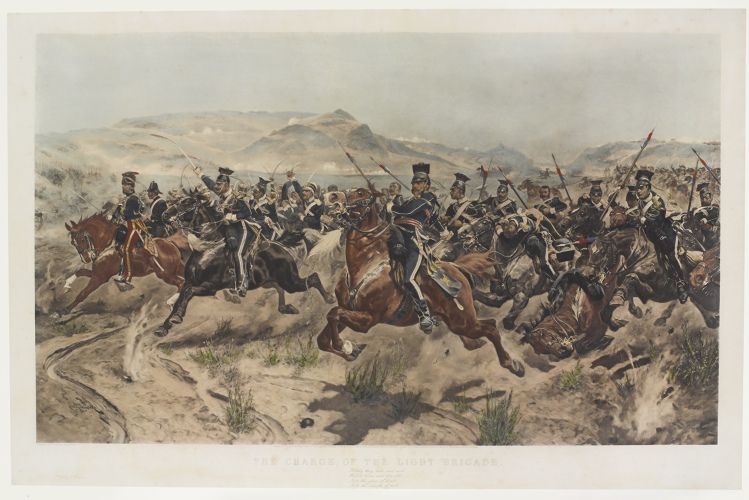
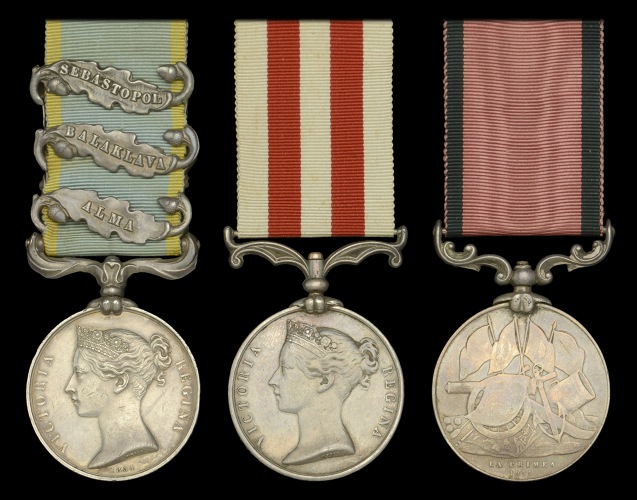
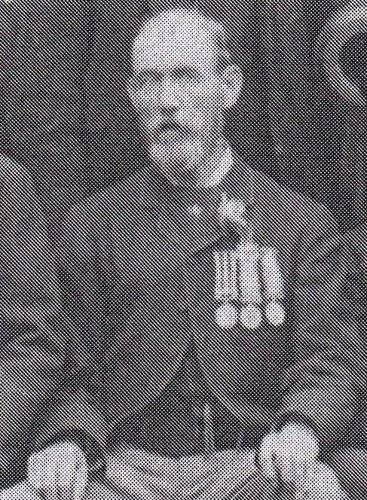
An important group of three medals awarded to Sergeant James William Wightman of the 17th Lancers, who was the central figure in the iconic painting of the Charge of the Light Brigade, is to be sold in an auction of Orders, Decorations, Medals and Militaria at Noonans Mayfair (16 Bolton Street) on Wednesday, June 17, 2026. The medals have remained in the same collection for the past 40 years and are estimated to fetch £6,000-£8,000.
Christopher Mellor-Hill, Head of Client Liaison at Noonans added: “The Charge of the Light Brigade is considered as one of the most famous and tragic of actions in British military history. We are very pleased to be offering this important set of medals, which also includes Sergeant Wightman’s Indian Mutiny medal. Wightman was the key figure in Richard Caton Woodville’s iconic painting, which is now hangs at the National Army Museum, who also have his diaries.”
Born in York in 1834, Wightman enlisted in 1852 and was severely wounded in no fewer than 13 places and subsequently taken prisoner in the Charge of the Light Brigade on 25th October 1854. He rejoined his regiment in the winter of 1855, fought in the Indian Mutiny, and was promoted to Ensign in the Military Train in 1865. He later became Secretary of the Balaklava Commemoration Society and left one of the finest first-hand accounts of the charge. Wightman spent the rest of his life living in London, until his death in February 1907 and he was buried in Brompton Cemetery.
Included in the auction will be a rare original copy of the recipient's Balaklava and Russian captivity memoirs that were published in May 1892. Extracts include: "And I remember as if it were but yesterday Cardigan's figure and attitude, as he faced the brigade and in his strong hoarse voice gave the momentous word of command, 'The brigade will advance! First squadron of 17th Lancers direct! Calm as on parade - calmer indeed by far than his wont on parade - stately, square and erect, master of himself, his brigade, and his noble charger, Cardigan looked the ideal cavalry leader, with his stern firm face and his quiet soldierly bearing. His long military seat was perfection on the thoroughbred chestnut 'Ronald' with the 'white stockings' on the near hind and fore, which my father, his old riding-master, had broken for him. He was in the full uniform of his old corps, the 11th Hussars, and he wore the pelisse, not slung, but put on like a patrol jacket, its front one blaze of gold lace. His drawn sword was in his hand at the slope and never saw I man fitter to wield the weapon.”
He continued: “As I have said, he gave the word of command, and then turning his head toward his trumpeter, Britten of the Lancers, he quietly said, 'Sound the Advance!' and wheeled his horse, facing the dark mass at the farther end of the valley which we knew to be the enemy. The trumpeter sounded the ‘Walk;’ after a few horse-lengths came the ‘Trot.' I did not hear the 'Gallop', but it was sounded. Neither voice nor trumpet, so far as I know, ordered the 'Charge'"
Share This Page