Article
23 April 2026
The collection of more than 70 17th tokens of Cornwall formed by Mac Macarthy fetched a hammer price of £21,830 against a pre-sale estimate of £15,000 in an auction of British Trade Tokens, Tickets and Passes at Noonans Mayfair (16 Bolton Street) on Wednesday, April 22, 2026.
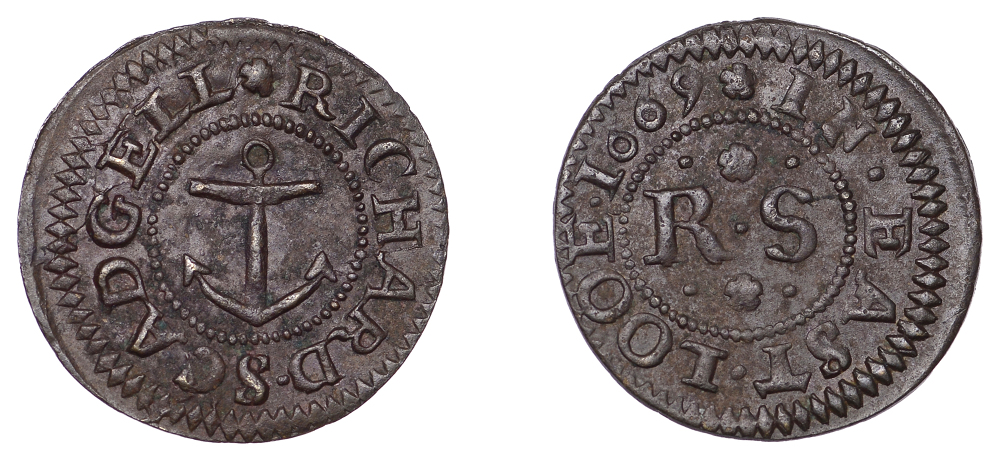
The highest price of the collection, which was 100% sold, was paid for an exceptionally rare farthing from East Looe, dating from 1669 bearing the name of Richard Scadgell, which sold for a hammer price of £1,000 against an estimate of £500-£700. It was bought by a private collector living in Looe [lot 71].
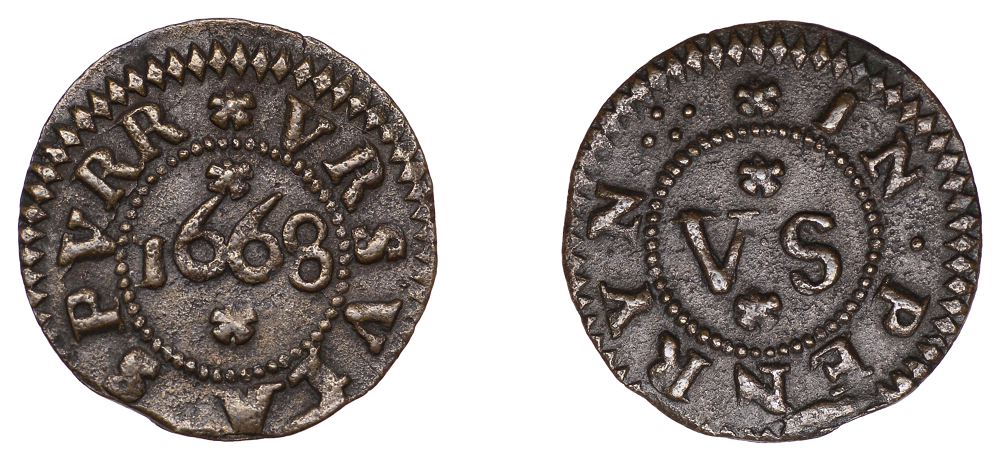
While from Penryn, is a very fine and extremely rare farthing inscribed Ursula Spurr 1668, sold for a hammer price of £850 against an estimate of £400-£500. It was bought by a London dealer acting on behalf of a private collector [lot 110].
As Peter Preston-Morley, Special Projects Director (Numismatics) at Noonans explained: “Tokens can provide the sort of fascinating, gritty local detail that other records miss when it comes to creating a clear picture of the past and this is one example! There is evidence in the 1658 Will of Vincent Smaley, father of Ursula Spurr, that she was married to an unsatisfactory husband. Smaley left his daughter £8 per year during her husband’s life, but if he died, she was then to have £100 per year – presumably he felt the husband was not competent to handle such a large amount of money.”
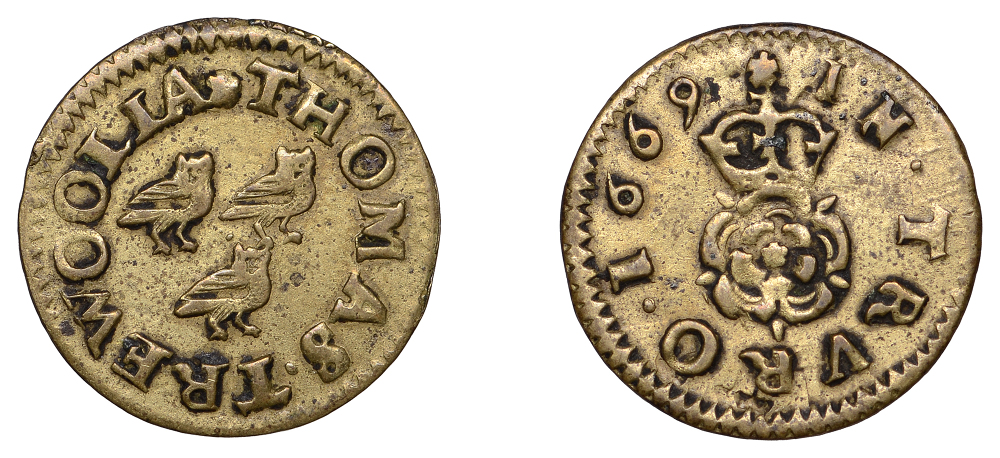
Also of note was an extremely rare farthing dating from 1669 from Truro, bearing the name Thomas Trewoolla realised a hammer price of £750 against a pre-sale estimate of £300-£400. The purchaser lives in Truro [lot 137].
The collection featured tokens for people who lived in St Keverne; East Looe; Penzance; Liskeard; Lostwithiel; Padstow; Penryn; Truro; Camelford; Falmouth; Helston; Launceston; St. Ives; Fowey, plus many others.
As Preston-Morley, added: “Tokens were a currency substitute issued by private individuals, merchants and organisations when governments were not, for various reasons, issuing small change. They are mostly copper, although during the Napoleonic wars silver tokens were also made and circulated.”
Share This Page