Article
1 April 2026
FROM WICKET-KEEPER AND ARTIST TO GUARDIAN OF THE FLAME FOR THE GLORIOUS GLOSTERS
Jack Russell is best known as the finest wicket-keeper in England for much of the 1990s. A noted artist today, perhaps less well known has been his dedication as a collector of campaign medals.
Now enthusiasts will benefit from that dedication as The Jack Russell collection of 135 medals, focusing on the Gloucestershire Regiment, expected to fetch around £100,000 on 15 April.
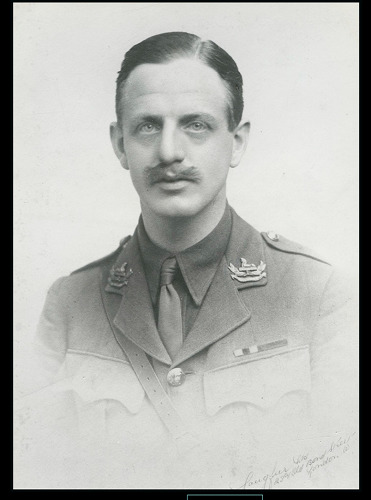
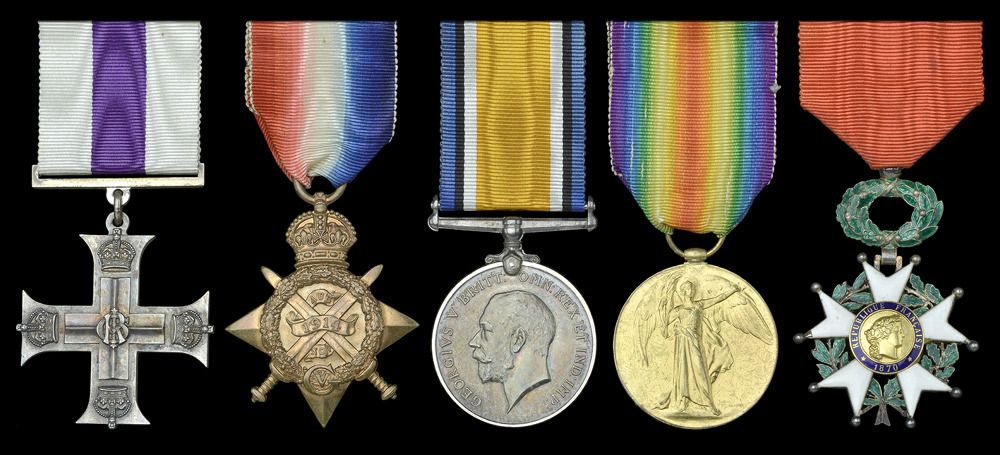
Leading the highlights will be the Military Cross awarded to a member of the Gloucestershire Regiment who was killed on the first day of the Battle of the Somme on July 1, 1916. Awarded to Brevet Major Graham Bromhead Bosanquet, who was killed in action at Ovillers – the Battalion’s only fatality that day – it is estimated at £5,000-7,000.
Bosanquet had twice been wounded before, once at Festubert in December 1914 and again in the attack on Aubers Ridge in May 1915.
Robert Charles ‘Jack’ Russell was born in Stroud, Gloucestershire, in 1963, and made his First-Class debut for Gloucestershire County Cricket Club in 1981. Soon recognised as the finest wicket-keeper in the country, he played his first Test Match for England against Sri Lanka at Lord’s in August 1988 and came within a single shot of making a Test century on debut. The following year, with Australia the tourists for the Ashes, he cemented his place in the England team, and with 314 test runs at an average just under 40, including an unbeaten century at Old Trafford, to go with 18 dismissals behind the stumps, he finished the season as England’s player of the series. The following year he was named as one of Wisden’s Five Cricketers of the Year.
“The 1990s were, in general, lean years for English cricket, and it quickly became apparent to the England selectors that they only had two Aces to play: one was the world’s best wicket-keeper in Jack; and the other was the only world-class batsman who could competently keep wicket in Alec Stewart,” said Oliver Pepys, Auctioneer and Medal Specialist (Associate Director) Noonans.
“A familiar pattern took hold – Jack would be selected for England, would remind everyone of his undoubted brilliance behind the stumps (and more than competence with the bat in hand), and then be jettisoned to make way for an extra batsman or bowler as yet another series slipped away.
“There were some notable and glorious highlights along the way, in particular his match-saving marathon fourth-innings partnership with Michael Atherton against South Africa in Johannesburg (the same match in which Jack took a world-record eleven dismissals behind the stumps), and a Test Match Century against India at Lord’s, but more often than not the paucity of talent in the England team meant that he was left out.”
Appointed a Member of the Order of the British Empire in the 1996 Birthday Honours’ List, Russell played the last of his 54 Test Matches for England in the Caribbean in 1998.
“He should (and in a stronger team would) have played many more,” said Oliver Pepys. “However, England’s loss was Gloucestershire’s gain, and over the next few years Jack was at the forefront of the county’s success in one-day cricket, winning four Lord’s finals in a row. I first saw Jack play live in the summer of 1999, in the first of these finals, against Yorkshire: standing up to the stumps to the Gloucestershire fast bowlers, and directing affairs in his trademark battered old sun-hat, he had an aura around him, and was clearly still the finest purveyor of his craft in the land.”
A talented artist, Jack Russell has his own gallery in Chipping Sodbury, where his wide range of subjects include the buildings and countryside of Gloucestershire; sporting and military personalities; and the cricket grounds of England.
“What he is less well known for, until now, is his interest in Military History, particularly the history of his own county regiment, the Gloucestershire Regiment (formerly the 28th and 61st Regiments of Foot),” said Oliver Pepys. “His collection of Medals to the Gloucestershire Regiment tells the story not only of this fine old Infantry Regiment and its major actions, but also, and perhaps more fittingly, the individual stories of some of the men of the Glorious Glosters. It is by their deeds that they are known.”
As Jack Russell writes in the catalogue foreword: “From an early age, I have always had an interest in history, and in particular military history. Being a Gloucestershire boy, I naturally took a strong interest in my own county regiment. The passion intensified during my teenage years when my driving instructor, Sargent Henry Pegler, would tell me stories of his involvement at the Battle of Imjin River where the regiment fought its famous action, and where he himself was badly wounded and taken prisoner of war.
“When abroad on tour with the England cricket team I would always try to spend as much time as I could visiting the nearest battlefield or military site and, whenever possible, pay my respects to any military graves that I could find. I always found this very poignant as it is the experiences of the men themselves that hold the greatest fascination for me. What were their experiences like? What was it like to be in the heat of battle? If I hadn't been fortunate enough to play cricket and paint pictures for a living, there is no doubt I would have ended up being a soldier.”
He continued: “I started collecting medals around thirty years ago. Initially I collected to all regiments, but I soon focused my attention on my home county regiment, trying to cover each battalion and as many campaigns as possible.
“I suspect it may happen with most collectors, but for me it has now come to a point where I feel it is time for a change in direction. I feel that I have got as close to the regiment and its fighting men as I possibly could, and it is now the time to hand them on to other collectors to take guardianship and look after these extraordinary men’s medals for the next stage of their journey.
“In which direction will my collecting go now? I'm not entirely sure. My Gloucestershire roots are strong so I may start collecting medals to Gloucestershire men who fought in other regiments. I may even narrow it down to soldiers from my hometown, Stroud. Who knows? However, I am certain that my passion for military history will continue to grow – with me it is an addiction! Finally, a message to the new custodians of the medals in this collection: I hope you enjoy their company as much as I have.”
Share This Page