Article
8 January 2026
HISTORIC GRASSHOPPER RING LEADS A WEALTH OF TREASURES
Noonans’ Jewellery department celebrated 10 years in 2025 and marked the occasion by offering a slew of outstanding pieces, several with impressive royal connections.
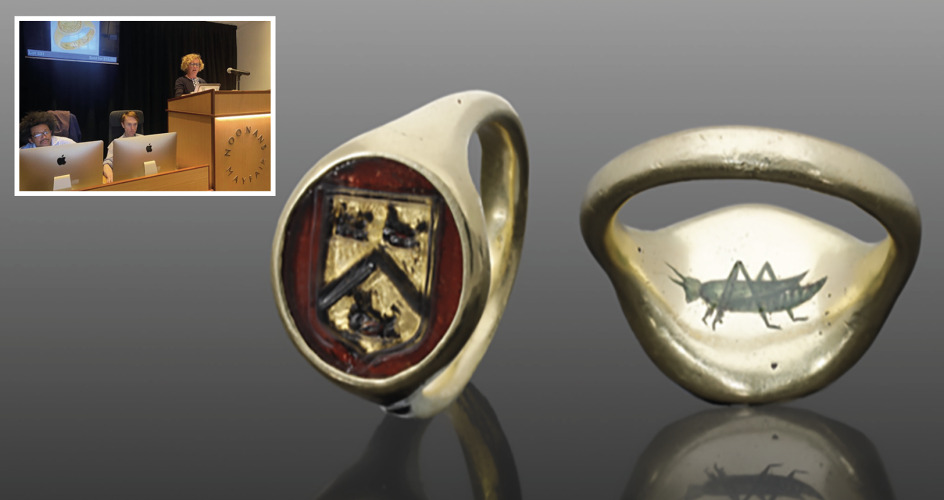
One of the most interesting items was not just historic, but a new discovery: the 16th century ‘Grasshopper’ seal ring, presented by the great Tudor financier and merchant, Sir Thomas Gresham, financial agent to four Tudor monarchs.
The heavy seal ring, dating from circa 1560-75, is one of a series of Grasshopper rings presented as gifts by Sir Thomas to people of influence – possibly in thanks for past services or as a token of friendship or loyalty, and symbolising trust, wisdom and opportunity.
A family heirloom from the 19th century, the ring had passed by descent until around 2010. This newly rediscovered ring takes the total known Grasshopper rings to 10. One example is in the British Museum, a second in the V&A museum, a third in St. Fagan’s National Museum of History, Cardiff, with further examples in private collections.
Known as the Warner ring, this was the first Grasshopper ring to be offered at auction for almost 50 years. It was carved with the coat of arms of Warner, the underside of the bezel engraved with a green enamelled grasshopper, the Gresham family crest. It is believed to have been gifted from Gresham to Mark Warner, of All Hallows, Lombard Street in the City of London, a cloth merchant and liveryman of the Drapers’ Company.
The slight variation in the design of the rings, particularly the form and orientation of the grasshopper, indicates that they were probably made by several different goldsmiths, over a period of approximately 10-15 years. Two of the rings are dated to the bezel alongside the coat of arms (the Woodhouse ring to 1557 and the Taylor ring to 1575).
The hammer price on 17 June of £42,000 was more than four times pre-sale expectations.
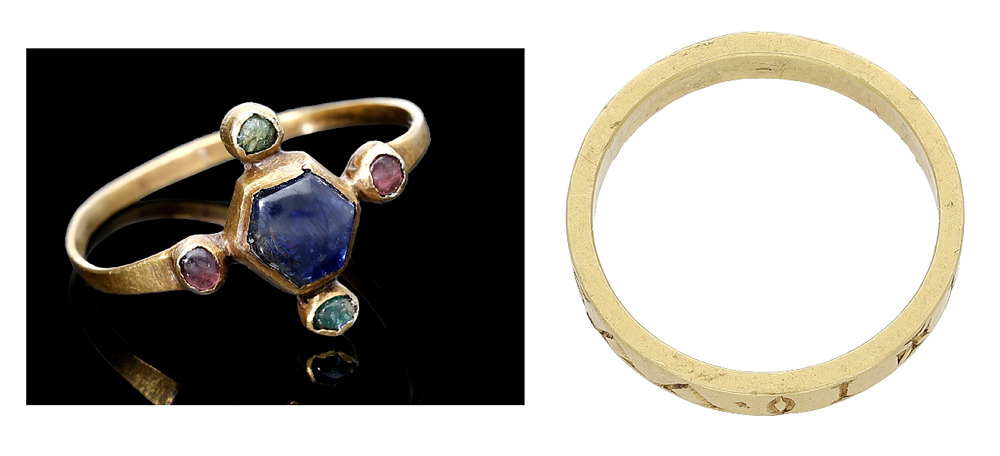
The Jewellery department has developed a strong reputation for offering early jewels – in particular medieval and post-medieval rings, many of which have been detectorist finds. Highlights from the year included two medieval rings found by metal detectorists in Norfolk that fetched a combined hammer price of £30,000 on 26 March.
The first was a rare gem-set Medieval Bishop’s ring known as the King Row Ring, dating from the late 12th/early 13th century, and discovered by Mark Sell on King Row in Shipdham, Norfolk, on a cold but sunny afternoon in November 2019. It took £19,000. The second, a very fine medieval gold posy ring, dating from the 13th / 14th century, found by Mark Sell’s friend and fellow detectorist Richard Girling in March 2024, in Merton, near Thetford, took £11,000.
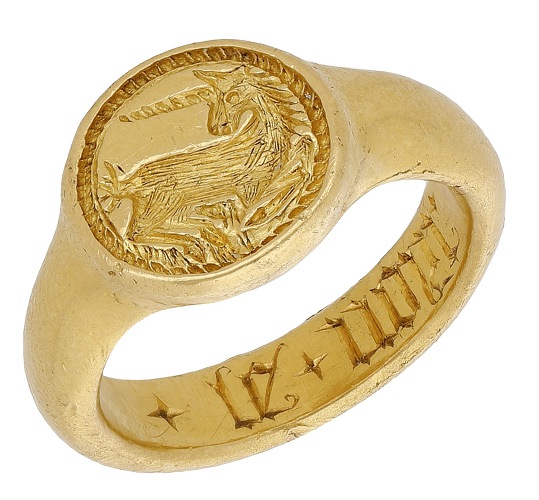
In the same sale as the Grasshopper ring, Noonans offered a 15th/16h century unicorn gold seal ring which sold for £15,000 against hopes of £8,000-10,000. It had been in a family collection for over half a century. The symbol of the unicorn, as engraved here, is said to represent purity, innocence and truth. In the Middle Ages the unicorn was sometimes used to symbolise the death and sacrifice of Christ.
A stand-out lot dating from the Victorian period was a mid-19th century gold and enamel serpent bracelet offered for sale on 16 September. Its graduating and articulated body decorated with blue enamel, and the head applied with an opal and rose-cut diamond cluster and with ruby cabochon eyes.
Presented in a fitted case, it had a distinguished provenance, the underside of the case bearing a handwritten label reading: ‘Belonged to Grandmama Aberdare, given her by Sir Charles Napier, (Norah Creine Napier) given me at my wedding by Aunt Alice Bruce. To go back to England.’
Sir Charles Napier (1782-1853) had given the bracelet to ‘Grandmama Aberdare’. It had then passed down through the family to Alice Bruce, an aunt of the ultimate recipient, who had written the history on this note, as a wedding gift.
‘Grandmama Aberdare’ was Lady Nora Creina Blanche Bruce (1827-97), second wife of the 1st Baron Aberdare (1815-95), who became Lord President of the Council and Home Secretary under Gladstone, and the daughter of Sir William Napier (1785-1860), the younger brother of Sir Charles. Both brothers fought in the Peninsular War, and both later rose to the rank of General.
Estimated at £3,000-5,000, the hammer fell at £14,000.
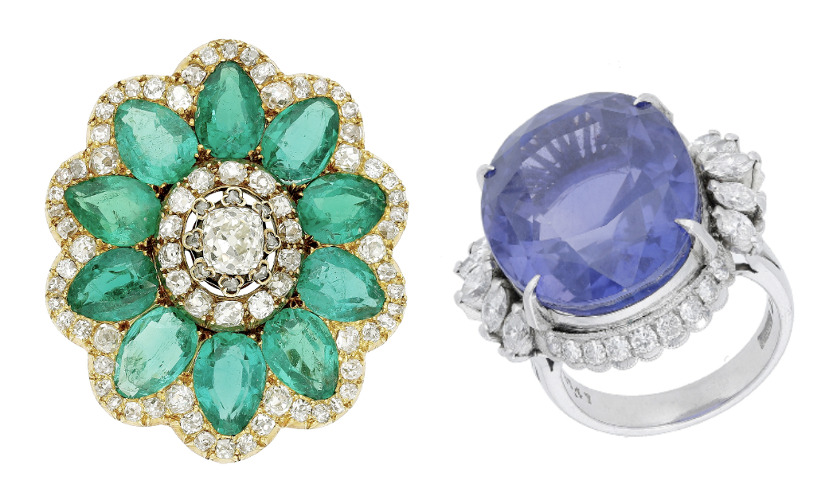
A fine Colombian emerald and diamond flowerhead pendant, included in the 16 September auction, left its estimate of £4,000-6,000 far behind, when it sold for £13,000 hammer.
Modern British designer jewellery also performed strongly, with a magnificent display coming together for the 16 September auction, including top designers from the 1960s and ’70s period – such as Andrew Grima, John Donald, Ben Rosenfeld, Gillian Packard, Stuart Devlin et al, the section headed by an 18ct gold heavy textured necklace by Alan Martin Gard, selling for £14,000.
For sheer ‘bling’, it would be hard to beat the Sri Lankan colour-change untreated sapphire and diamond ring that soared over its £15,000-18,000 guide to sell for £28,000 on 26 March.
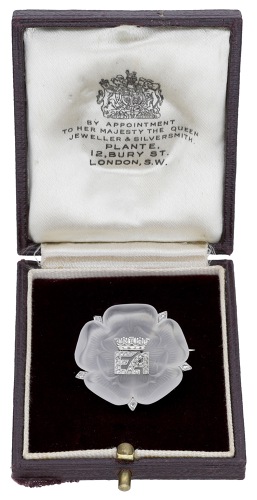
Pick of the Royal jewels appeared in the 25 November auction: The York Rose brooch – an exquisite brooch, one of eight examples presented by Prince Albert (later King George VI) to the bridesmaids who attended his bride Lady Elizabeth Bowes-Lyon (later Queen Elizabeth, the Queen Mother) at their wedding on 26 April 1923.
The frosted rock crystal and diamond brooch, measuring just 25mm in diameter, was made by the Royal jewellers, Garrard & Co., circa 1923, and consisted of a carved Tudor rose, centred with rose-cut diamond initials ‘EA’ – Elizabeth and Albert – the brooch mounted in platinum.
It is not known which of the Royal bridesmaids received this particular example, but each of the eight bridesmaids – Lady Mary Cambridge, the Hon Diamond Harding, Lady Mary Thynne, the Hon Elizabeth Elphinstone, Lady May Cambridge, Lady Catherine Hamilton, Miss Betty Cator and the Hon Cecilia Bowes-Lyon – received an identical brooch as a gift from the bridegroom. Estimated at £3,000-5,000, the brooch trebled high estimate, selling for a hammer price of £15,000.
“This has been a very exciting and rewarding 10th anniversary year for the Jewellery department at Noonans,” said its Head of Department, France Noble. “It is always a pleasure to make new discoveries, the Gresham ring being a thrilling find – and of significant historic interest. Now we look forward to 2026, and finding more treasures old and new.”
Share This Page