Auction Catalogue




 Create new list
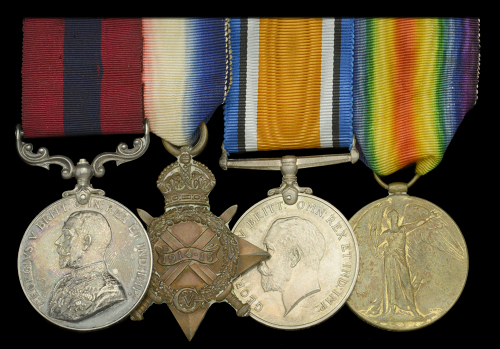
A Great War ‘Western Front’ D.C.M. group of four awarded to Corporal, later Second Lieutenant, R. E. Crossman, 1/4th Battalion, Gloucestershire Regiment, who was awarded the Distinguished Conduct Medal for his gallantry during a night patrol at the Knoll on 22 April 1917, and was wounded by gun shot to the leg on 24 March 1918
Distinguished Conduct Medal, G.V.R. (200474 Cpl. R. E. Crossman. 1/4 Glouc: R. -T.F.); 1914-15 Star (2328 L. Cpl. R. E. Crossman. Glouc. R.); British War Medal 1914-20 (2/Lt. R. E. Crossman. Glouc. R.) and stamped ‘Duplicate’; Victory Medal 1914-19 (2. Lieut. R. E. Crossman.) minor official correction to surname; together with the related miniature awards, these mounted as worn, the BWM a Duplicate, good very fine (4) £800-£1,000
This lot was sold as part of a special collection, The Jack Russell Collection of Medals to the Gloucestershire Regiment.

View
Collection
D.C.M. London Gazette 18 June 1917:
‘For conspicuous gallantry and devotion to duty. He took out a patrol under very heavy fire of all kinds, and succeeded in bringing back most valuable information. He showed a splendid example of courage and determination throughout.’
Annotated Gazette states: ‘Knoll.’
Reginald Edward Crossman was born in Bristol on 15 October 1896 and attested there for the Gloucestershire Regiment on 1 September 1914. He served with the 1/4th Battalion during the Great War on the Western Front from 31 March 1915, and was awarded the Distinguished Conduct Medal for his gallantry during a patrol on the night of 22 April 1917, prior to the Battalion’s attack on the Knoll on 24 April - the attack took pace at 11:00 p.m. that night, and by the early morning on 25 April “C” Company had gained their objective, but “A” and “D” Companies had pushed too far forwards. He was commissioned Second Lieutenant in the 2/5th Battalion, Gloucestershire Regiment on 30 October 1917, and saw further service with them, being wounded by gun shot to the left leg on 24 March 1918. He was evacuated to England on 29 March 1918, and relinquished his commission in 1919.
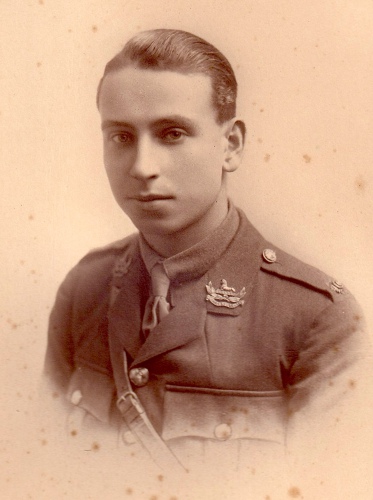
Sold with a portrait photograph of the recipient, mounted in a glazed oval frame; and copied research.
Share This Page